
Platelet Rich Plasma (PRP) Centrifuge Kit
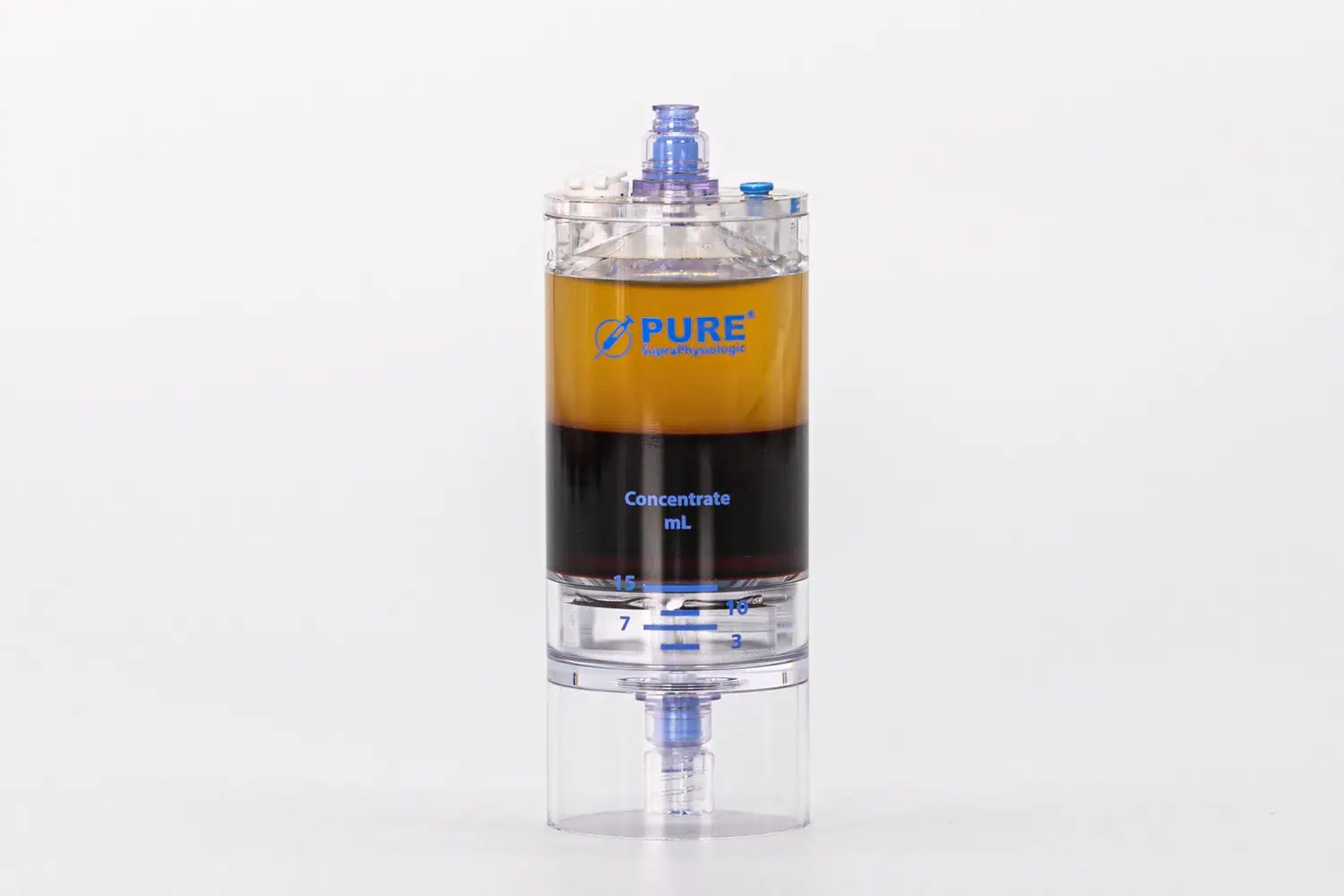
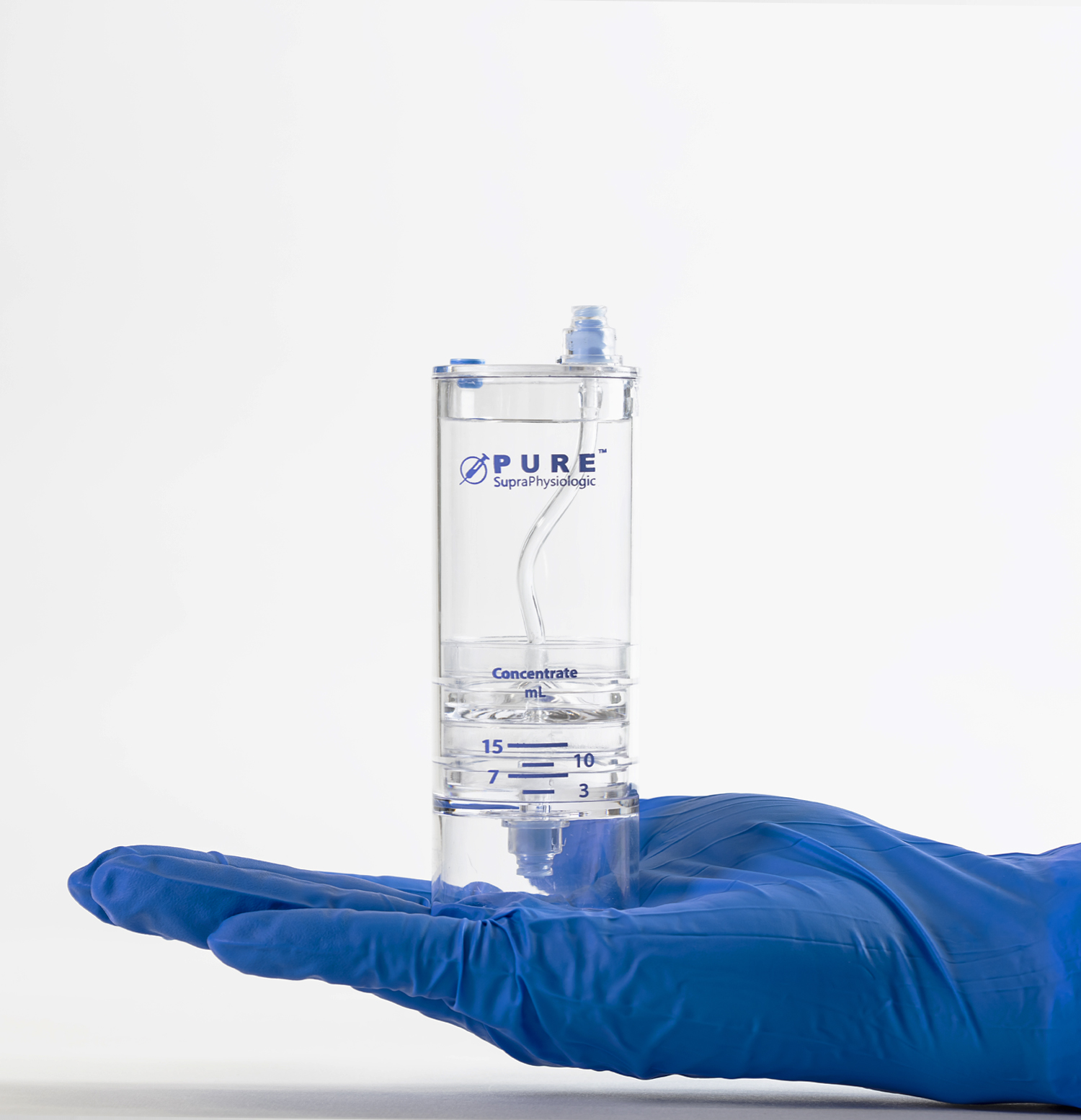
Emcyte PUREPRP® SUPRAPHYSIOLOGIC and Pure Two Autologous Platelet Rich Plasma
Accell Oropetics proudly supplies PurePRP® Supraphysiologic and Pure 2 Autologous Platelet-Rich Plasma (PRP) systems — innovative products developed by EmCyte Corporation, a global leader in regenerative biotechnology.
These FDA-approved PRP kits produce autologous platelet-rich plasma containing a rich and complex concentration of regenerative cellular components derived from the patient’s own blood.
Designed for precision and high performance, the PurePRP® system delivers superior biologic output proven to support tissue repair, accelerate healing, and enhance clinical outcomes across a broad range of conditions. Its versatility makes it a cornerstone in modern regenerative therapies, offering an effective, minimally invasive alternative to surgery for conditions such as degenerative joint disease, tendon, and ligament injuries.
The distinguishing feature of the PurePRP® centrifuge system lies in its ability to selectively remove wound-inhibiting factors while concentrating the body’s natural regenerative components. This unique capability sets it apart from other point-of-care PRP systems, giving healthcare providers a trusted, high-yield solution for promoting optimal patient recovery.
Accell Oropetics proudly supplies PurePRP® Supraphysiologic and Pure 2 Autologous Platelet-Rich Plasma (PRP) systems — innovative products developed by EmCyte Corporation, a global leader in regenerative biotechnology.
These FDA-approved PRP kits produce autologous platelet-rich plasma containing a rich and complex concentration of regenerative cellular components derived from the patient’s own blood.
Designed for precision and high performance, the PurePRP® system delivers superior biologic output proven to support tissue repair, accelerate healing, and enhance clinical outcomes across a broad range of conditions. Its versatility makes it a cornerstone in modern regenerative therapies, offering an effective, minimally invasive alternative to surgery for conditions such as degenerative joint disease, tendon, and ligament injuries.
The distinguishing feature of the PurePRP® centrifuge system lies in its ability to selectively remove wound-inhibiting factors while concentrating the body’s natural regenerative components. This unique capability sets it apart from other point-of-care PRP systems, giving healthcare providers a trusted, high-yield solution for promoting optimal patient recovery.
- GS30-Pure-II
- GS60-Pure-II
- GS120-Pure-II
- GS301-EU AbsolutePRP Gold 20mL Single Spin Kit
Interested in PurePRP® SP centrifuge kit for your practice?
PurePRP® SP Specifications
›4x-7x Platelet Concentration Over Baseline
›1.0 Million Platelets/µL
High Platelet Recovery
Platelet Rich Plasma Blood Consistency
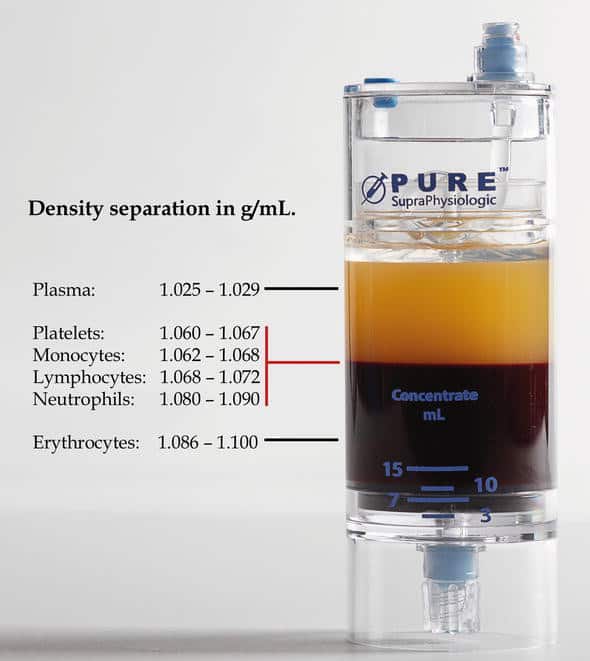
Understanding Platelet Rich Plasma (PRP) & C-PRP Derived From PurePRP® SP
What is Platelet Rich Plasma?
PRP therapy utilizes the body’s innate healing mechanisms by enhancing the natural growth factors involved in tissue repair. It is often chosen as a less invasive alternative to surgery for conditions such as degenerative joint diseases, as well as tendon and ligament injuries.
Over time, PRP has been incorporated into numerous fields, including aesthetic medicine, dentistry, pain management, and orthopedics. When prepared and administered correctly, PRP can meaningfully enhance recovery and improve patient outcomes.
Platelet Concentration and Clinical Efficacy
Scientific research has demonstrated that optimal bone and soft tissue healing occurs when platelet-rich plasma (PRP) contains at least 1,000,000 platelets per microliter, equivalent to a concentration of approximately 1 billion platelets per milliliter.
Accordingly, for a 10 mL treatment sample of concentrated PRP (C‑PRP) to achieve clinical effectiveness, it should contain a minimum of 10 billion functional platelets. Many commercially available systems fail to reach this concentration threshold, limiting their therapeutic efficacy.
Single Spin vs. Double Spin PRP
This process produces PRP with a lower concentration of platelets and growth factors compared to the double spin technique. Because red blood cells make up approximately 50% of blood volume, the maximum theoretical platelet concentration achievable from a single spin is about two times the baseline level—even assuming every platelet is successfully captured. This concentration remains below the optimal therapeutic threshold identified in scientific literature.
Double Spin PRP
In contrast, the double spin method involves two centrifugation cycles. The first spin separates the red blood cells from the plasma, while the second concentrates the platelets and growth factors more effectively.
This additional step yields a PRP product with a much higher platelet concentration and growth factor density than that obtained through the single spin method, resulting in greater potential for tissue repair and regeneration.
Leukocyte-Rich vs. Leukocyte-Poor PRP
What Does This Mean?
Leukocyte-rich PRP (LR‑PRP) and leukocyte-poor PRP (LP‑PRP) differ primarily in their concentration of white blood cells (leukocytes) within the platelet-rich plasma.
Leukocyte-Rich PRP (LR‑PRP)
LR‑PRP contains a higher concentration of leukocytes—typically exceeding 1 million cells per microliter—along with an elevated platelet concentration. The leukocytes present in LR‑PRP are thought to contribute anti-inflammatory and antimicrobial effects, potentially supporting tissue repair and infection control. However, their presence may also increase the likelihood of post-treatment discomfort, such as pain and swelling.
Leukocyte-Poor PRP (LP‑PRP)
LP‑PRP contains a reduced concentration of leukocytes—generally below 0.1 million cells per microliter—while maintaining a higher platelet density. This formulation is associated with a lower incidence of adverse reactions, such as inflammation or swelling, but may provide fewer of the immune-modulating benefits associated with leukocyte-rich preparations.